UI/UX Design Project - RESPONSIVE WEB DESIGN
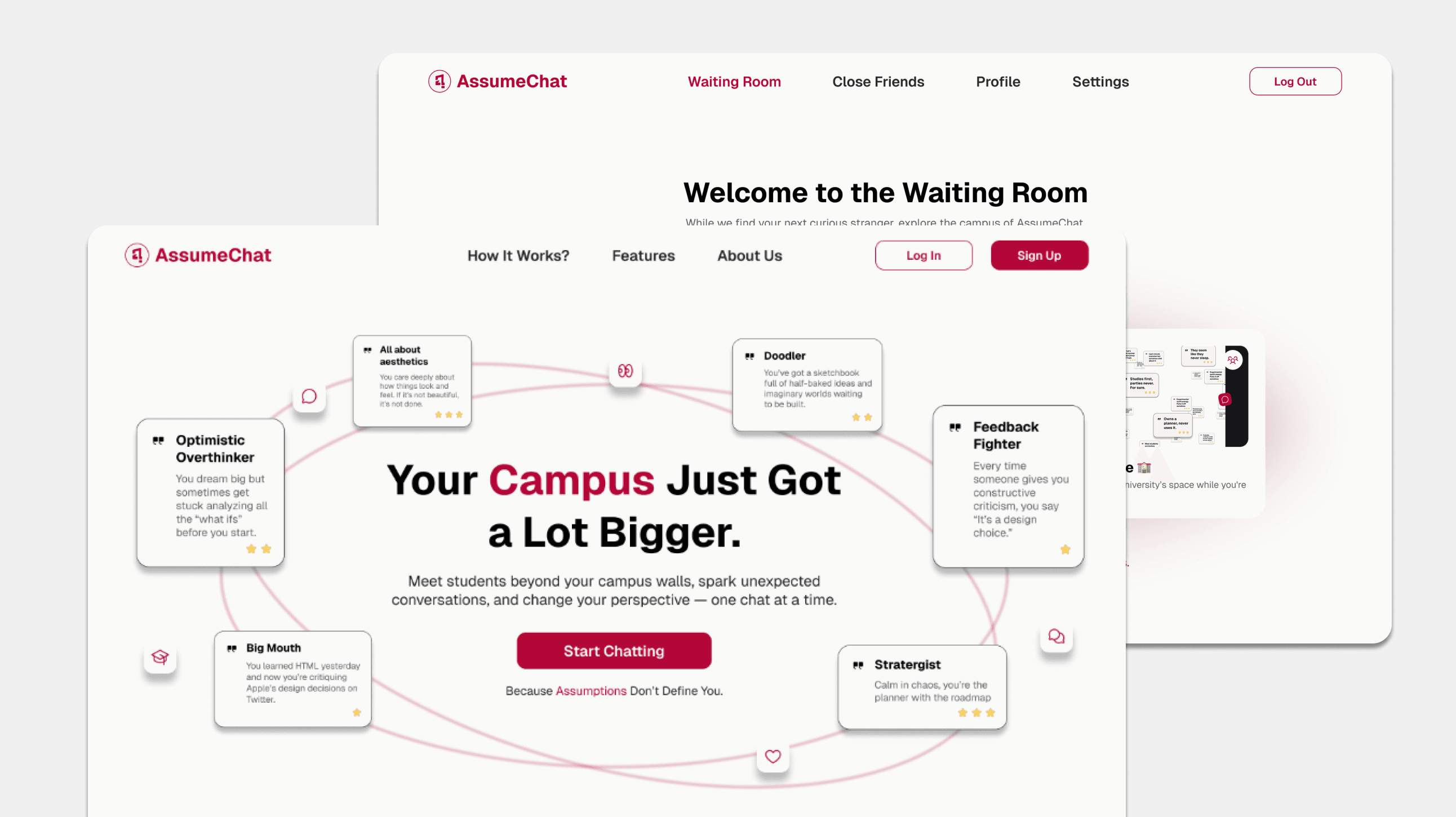
AssumeChat is an online platform designed to foster real-time, spontaneous conversations exclusively among college students. Drawing inspiration from platforms like Omegle, AssumeChat aims to provide a safer and more meaningful experience by verifying student identities and encouraging thoughtful interactions. The concept revolves around breaking down assumptions, allowing students to connect with others from different campuses in a playful yet secure environment.
Redesign the platform with a clear personality that would resonate with college students. The new experience needed to be visually exciting, foster spontaneous discovery, and provide a trustworthy space where users could connect without fear.
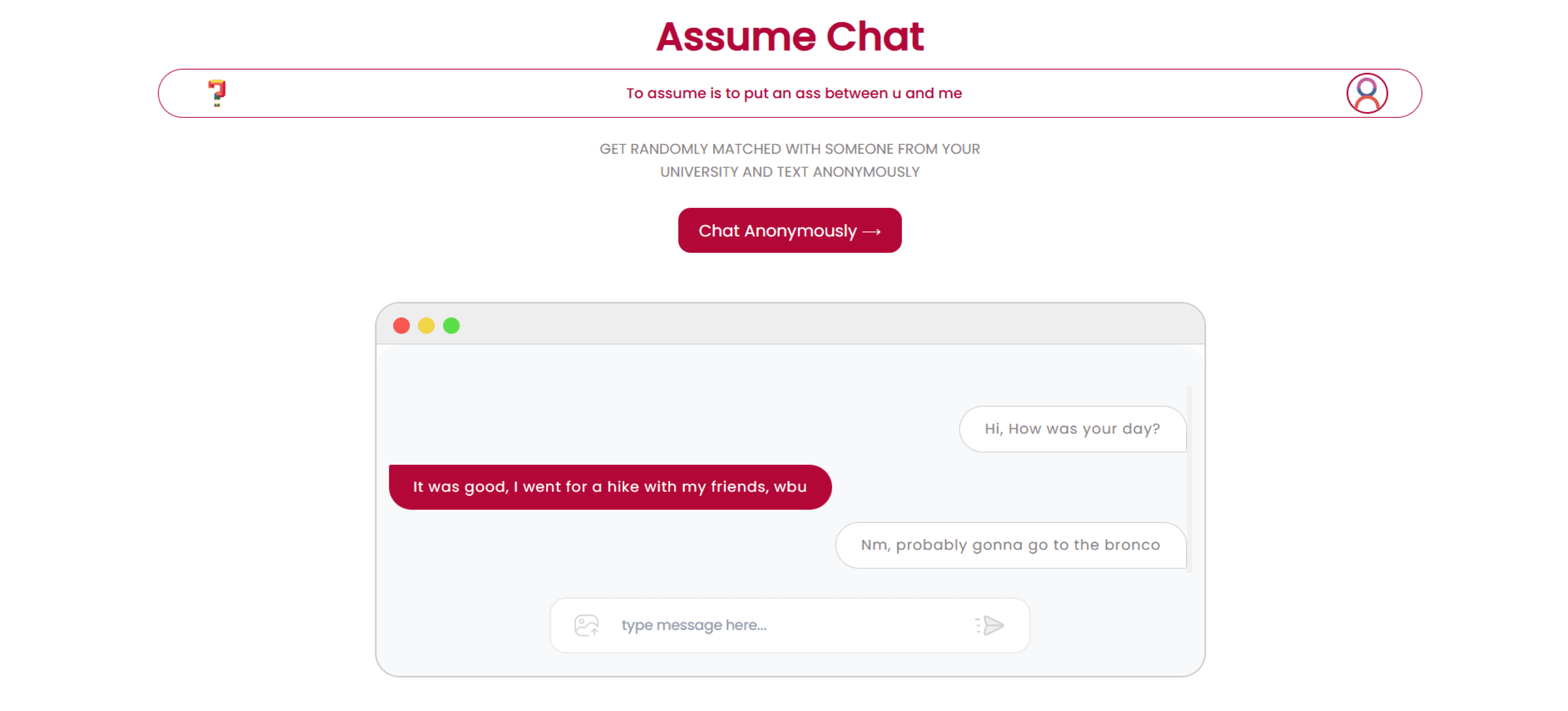
Original Assume Chat Website
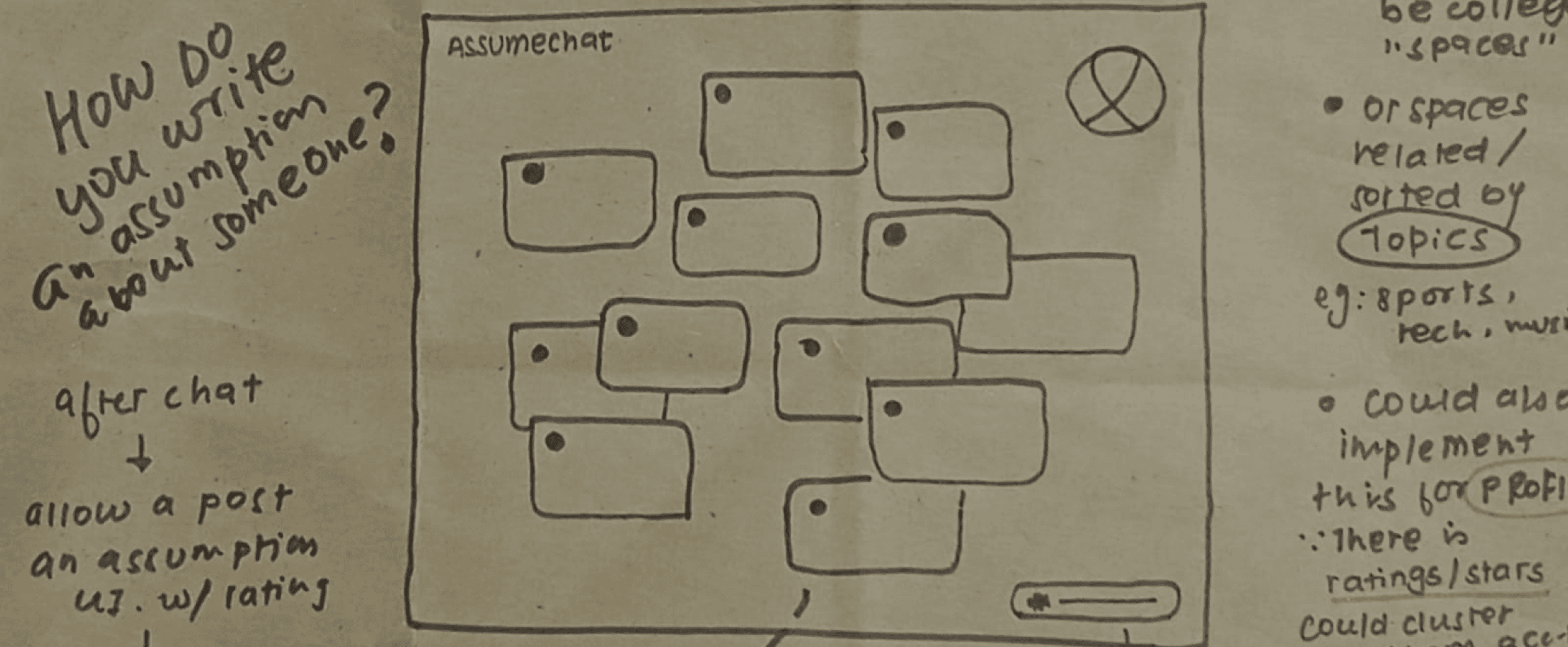
Brainstorming
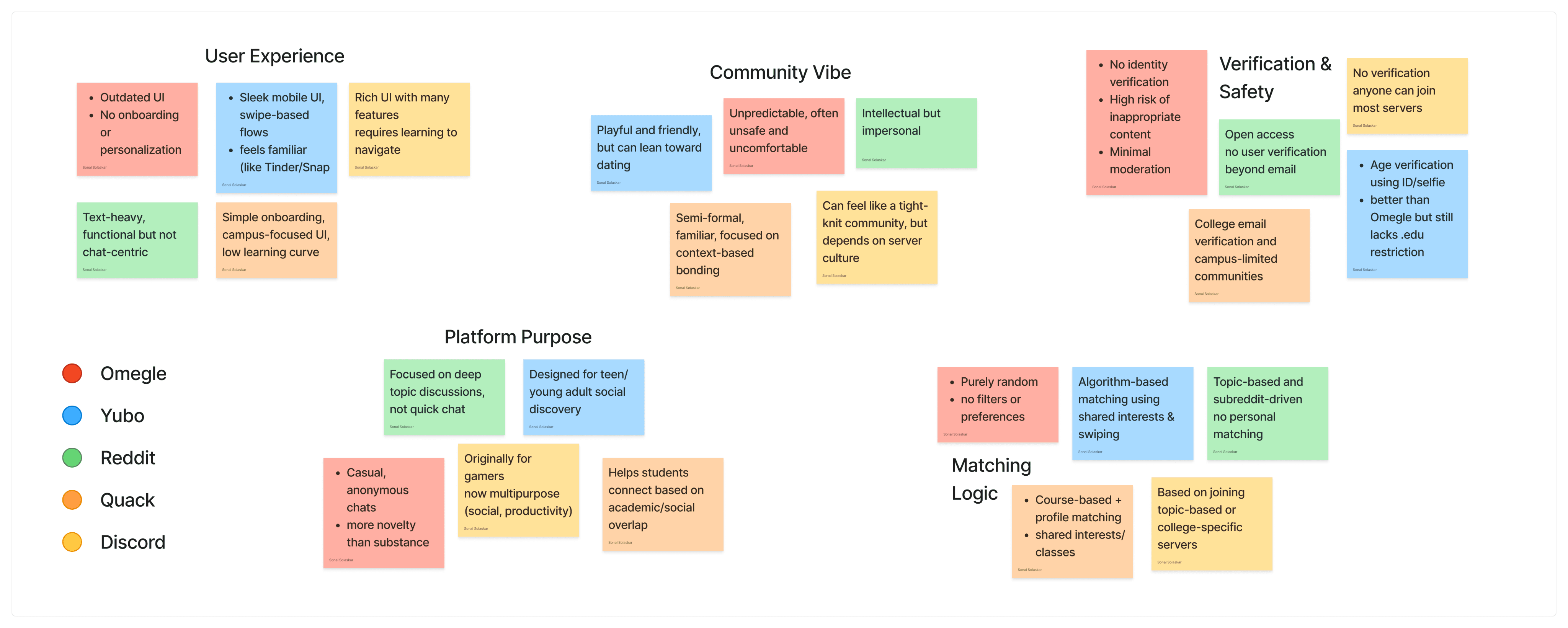
Competitive Audit
KEY TAKEAWAYS:
Most platforms either offer verification or spontaneous matching, but rarely both.
Omegle/Yubo offer spontaneity but lack authenticity safeguards.
Quack offers college authenticity but lacks that “serendipitous spark”.
Discord and Reddit are powerful, but require prior intent or communities to join.
There’s a gap for something that’s: Verified and Campus-exclusive, spontaneous, safe, playful and curious in tone
Based on the research and stakeholder discussions, the core features were finalized that would guide the user experience. Users would need to sign up using a verified .edu email to ensure safety. The onboarding process would include previews of sample chats to set expectations. Once inside, users would have access to a waiting room, where they could explore different interaction modes such as mini-games, reels, and assumption-based chats. Profile creation would be dynamic, encouraging students to list interesting facts and prompt-based assumptions. A rating and feedback loop would close the interaction, offering insights and promoting platform health.
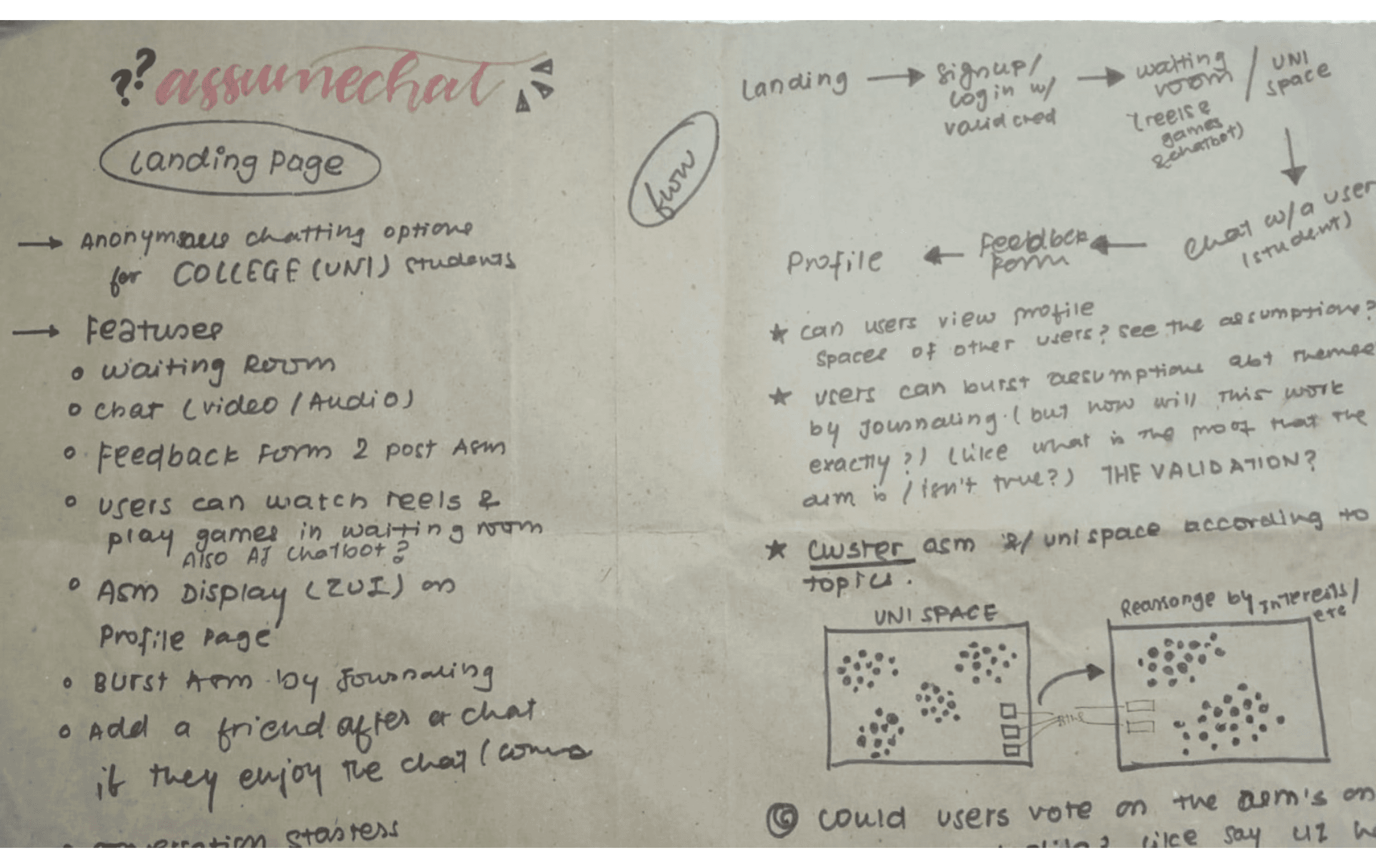
Ideating the features.
Brainstorming about the features.

Wireframed & Prototyped Initial Profile Space .
The onboarding process had to meet two essential characteristics:
Should be a personalized fun experience for the students
Ensure students that the platform is safe and keep them informed about the data use
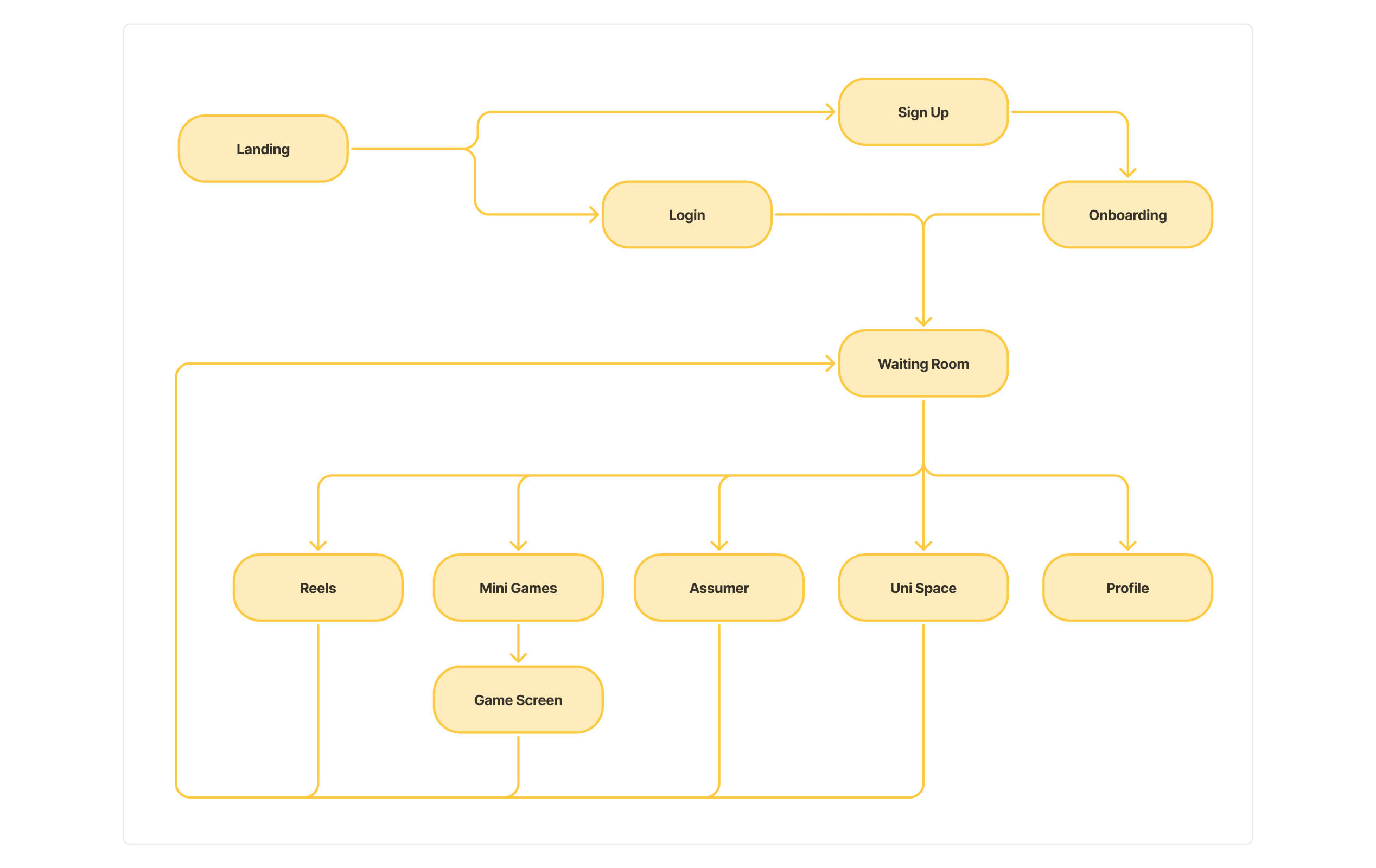
Initial Onboarding Flow.
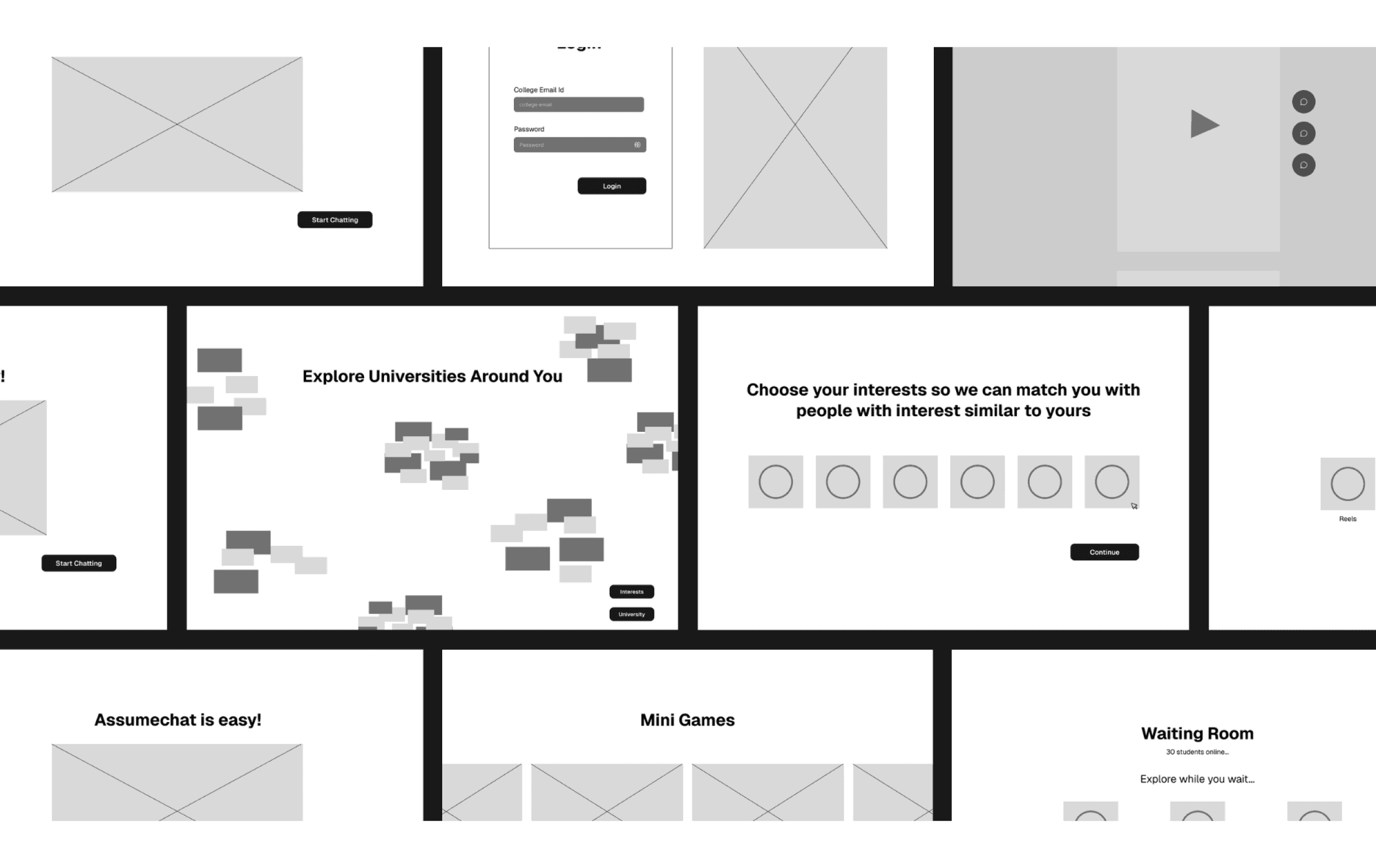
Initial Onboarding Wireframes.
Version 1: flows and screens

Purpose: Entry point to the platform; introduces AssumeChat's value proposition.
Features:
Clear CTA buttons for “Login” and “Sign Up.”
Brief explanation or tagline
Aesthetic that hints at exclusivity (college vibe) and curiosity (breaking assumptions).
Goal: Get users to initiate account access or create one
Purpose: Understand the user’s educational background to provide contextually relevant matches.
Helps tailor matches to similar academic environments and experiences.
Capture users' passions to enrich conversation quality.
Let users control who they chat with.
Goal: Ensure every chat feels intentional, relevant, and engaging, whether users are looking for relatable peers or exciting new perspectives.


Purpose: Acts as a hub between interactions.
User can choose from:
Reels – Watch short video content from other students.
Mini Games – Lightweight games (icebreakers).
Assumer – Jump into the assumption-based chat.
Uni Space – Explore interest-based groups.
Profile – Customize and view their own details.
Goal: Let users decide how they want to engage, encouraging spontaneous exploration.
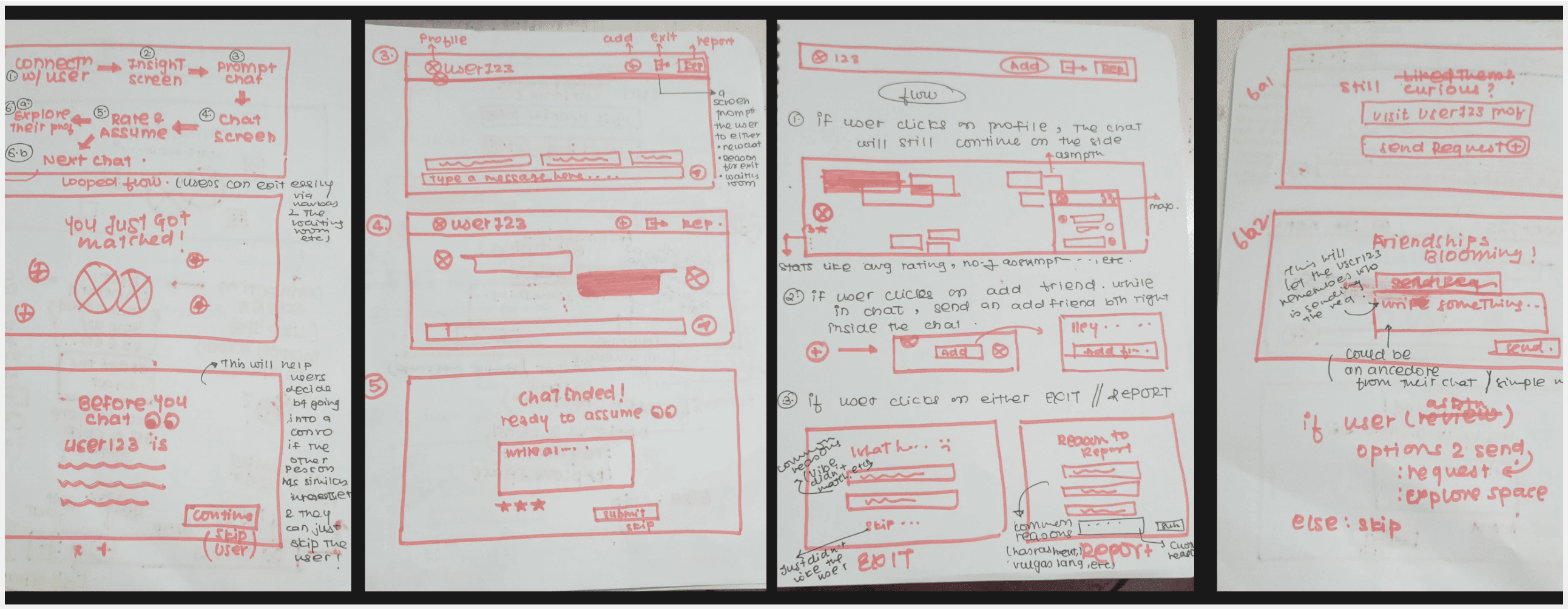
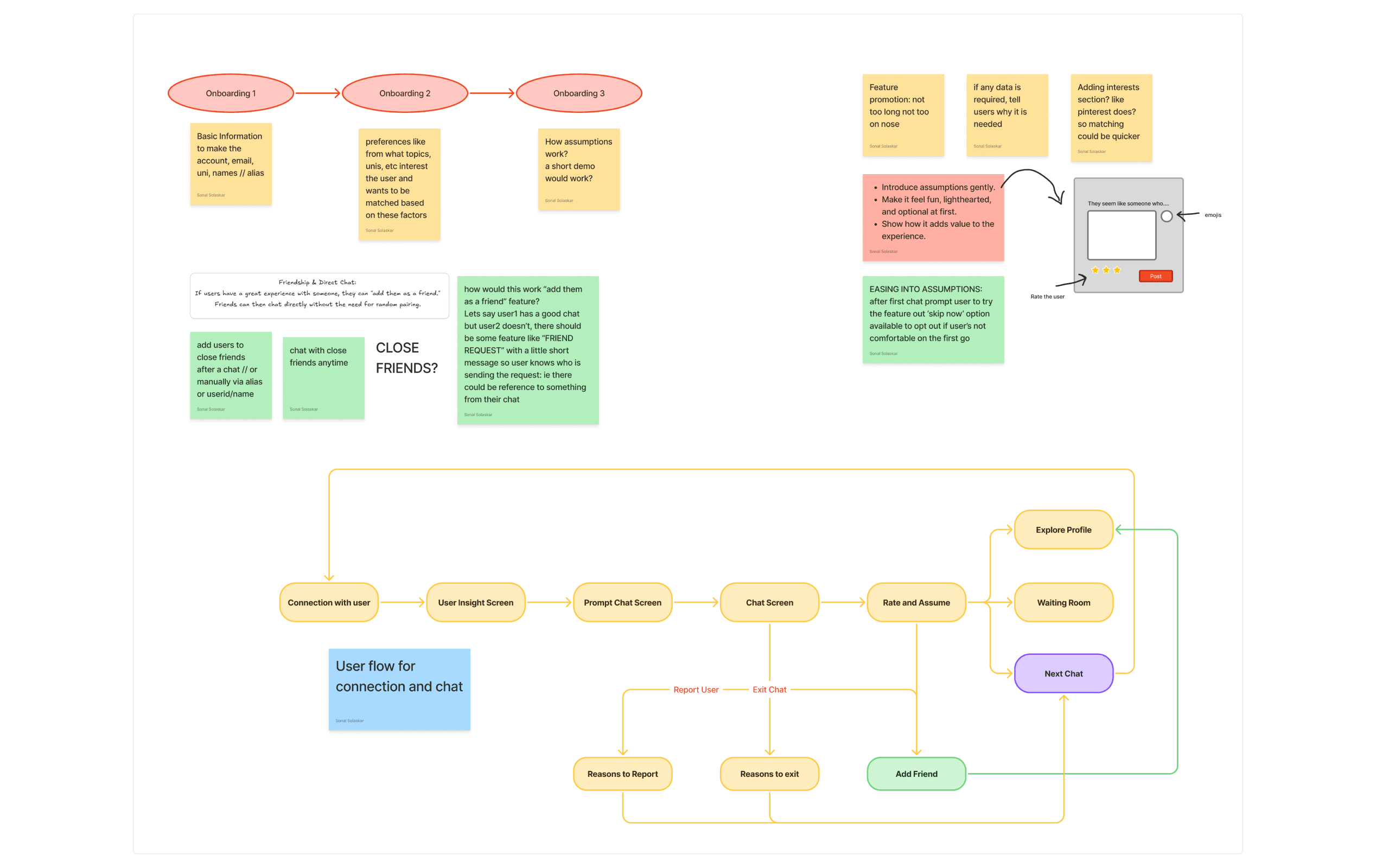
Ideating the connection flow.
The goal of the connection flow was to eliminate choice paralysis often seen in social apps and replicate the serendipity of campus hallway conversations.
By auto-pairing students based on verified college emails and light preference filters, we minimized friction and maximized curiosity. Each new chat starts with a gentle nudge, a prompt, a partial profile glimpse, or a shared interest to create just enough mystery to ignite a conversation.
To encourage authentic sharing, we designed the connection process to be safe, ephemeral, and respectful of student comfort.
Students always had the ability to exit, report, or skip at any point, and were clearly shown what data might be shared. By including light-hearted assumption guessing post-chat, we made the process feel playful, not intrusive, and reinforced the theme of exploring perspectives beyond appearances.
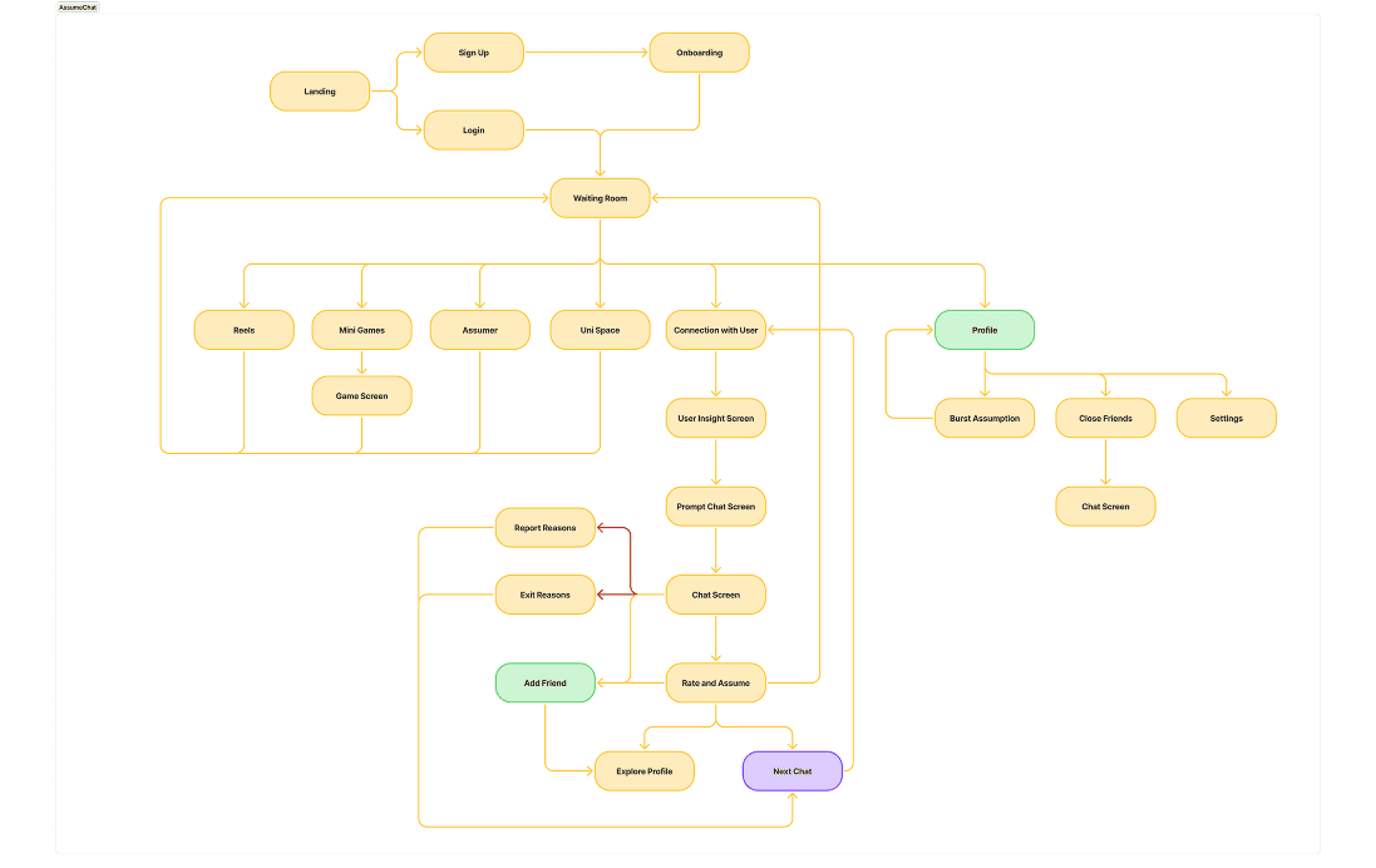
Connection Flow.
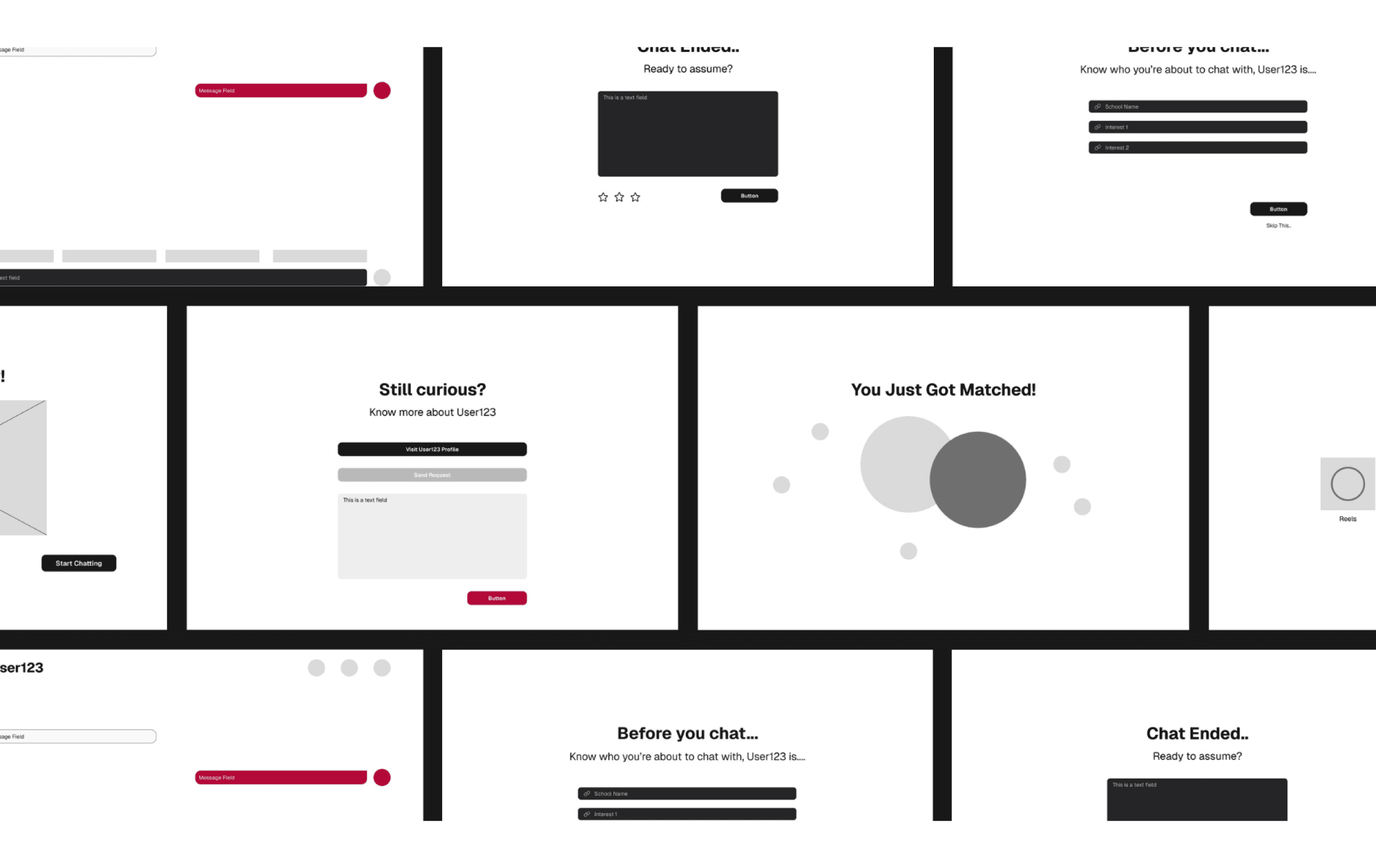
Connection Flow Wireframes.
Version 2: flows and screens

Purpose: Initiate spontaneous interactions; Build curiosity before chatting begins; Reduce friction and helps avoid awkward silences.
Features:
Users are automatically paired with another verified student.
A brief, glanceable view of the other user's interests.
Icebreaker prompts appear to encourage engagement.
Goal: Ease users into conversations by reducing friction, sparking curiosity, and making the experience feel safe and playful.
Purpose: Create a safe and fun environment for students to chat and assume. Add fun and reflective interaction.
Chat Screen: Features chat box, typing indicators, emoji/sticker support, exit/report options
Rate & Assume: After the chat, users can rate the conversation and write assumptions about the other user
Post-Chat Options: Enables persistent connection between users
Goal: Encourage thoughtful engagement, help maintain a safe environment, and refine future pairings based on user preferences.


Purpose: Act as a space for users to get to know other users, see the assumptions about them, let them journal and break the false assumptions.
Burst Assumptions: Users can burst assumptions on their profiles by journaling.
Close Friends: Users can talk to their close friends whenever, no waiting for connection required
Profile Settings: Customize and view their own details.
Goal: Give users a space for self-expression, reflection, and deeper social discovery.
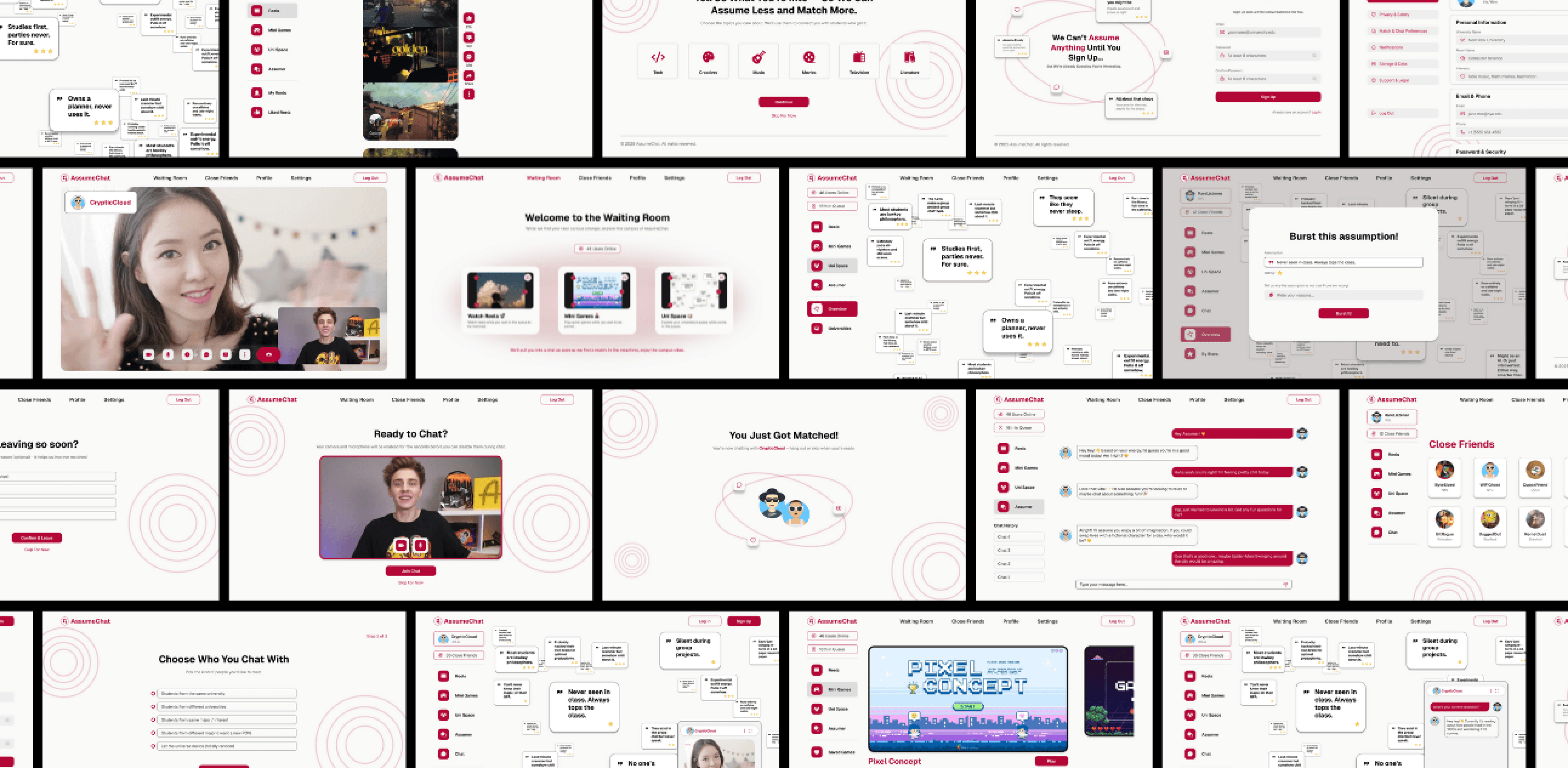
Final Screens
After the final meeting with the project lead, the following changes were to be made:
Camera & Mic Auto-On in Chat: Users enter with camera and mic on by default and may only mute post-match — enhancing authenticity and preventing pretense.
Chat Experience Split: Experimenting with “Game + Chat” or “Reels + Chat” hybrid formats to add lightweight engagement before or during connection.
Solitude & Reflection Design: System guides users from real-time interaction to a reflective space (journal or assumption bursting), enhancing depth and retention.
A/B Testing Flow for New Users: Let anonymous users try up to 3 chats without signing up.
If they get 5-star or "Good" ratings, they continue.
If not, they're banned and must register using a verified university email either way.
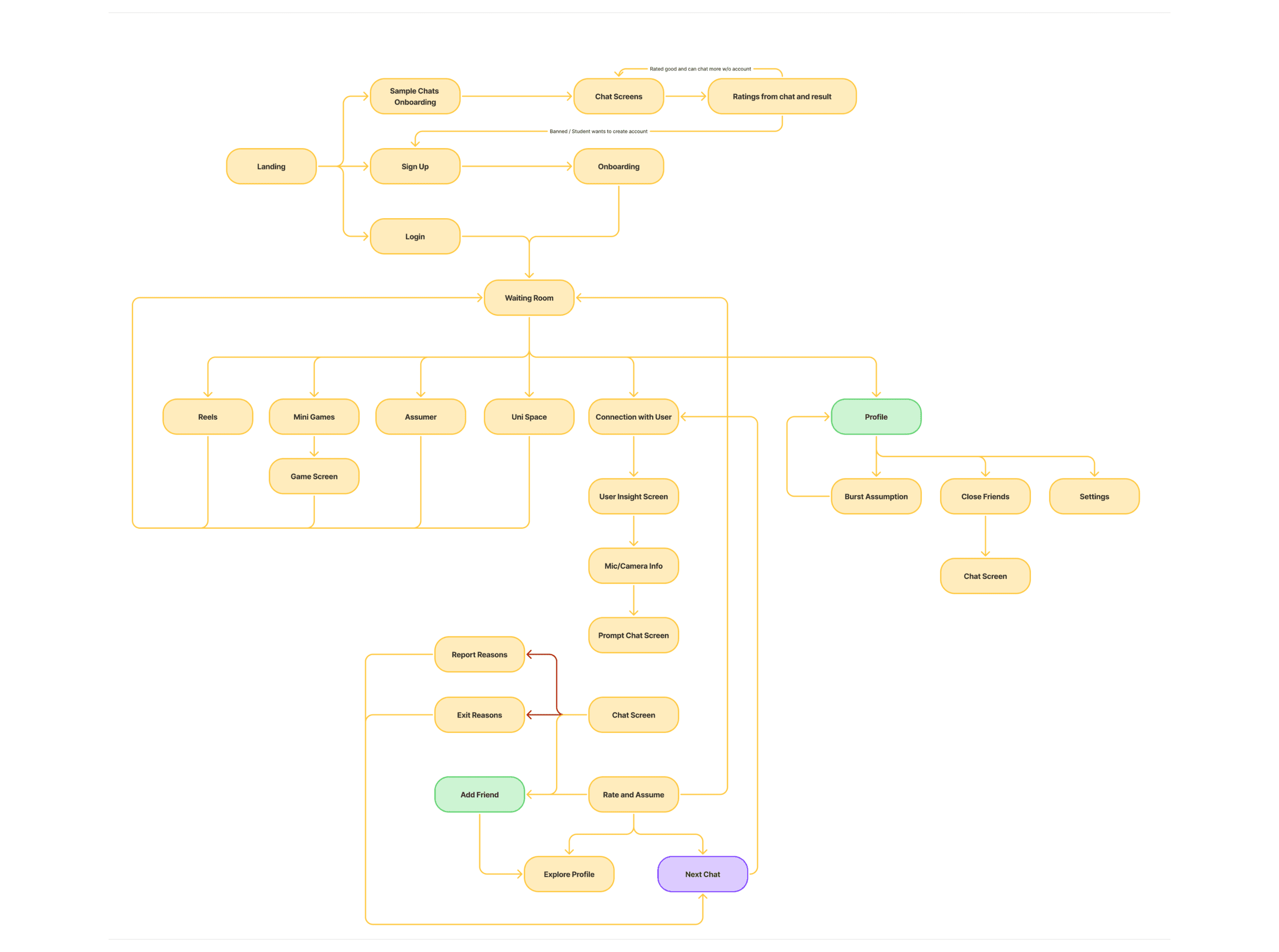
Assume Chat Final Flow.
Final Version: FLOWS AND SCREENS

Purpose: Let new users experience the core features without full signup; Convert quality users and block low-intent ones.
Features:
Guest Chat Access: Anonymous users allowed limited trial use.
Behavior Feedback: Based on how they’re rated or reported. Gatekeeping Logic:
Good rating? Ask to register and keep chatting.
Bad behavior? Block access and require verification.
Goal: To widen the funnel while protecting community quality, convert curious students and filter out non-serious users.
Purpose: Create a spontaneous, immersive, and engaging chat environment where users can connect meaningfully with strangers.
Prepare users for a seamless, intention-led connection with a stranger.
Drive authentic reactions and first impressions while maintaining playful, shared experiences like mini-games or reels.
Encourage thoughtful reflection post-conversation and promote meaningful retention through assumptions and ratings.
Goal: To turn strangers into insightful, memorable interactions by using a mic-first chat, assumption-based feedback, and integrated entertainment..

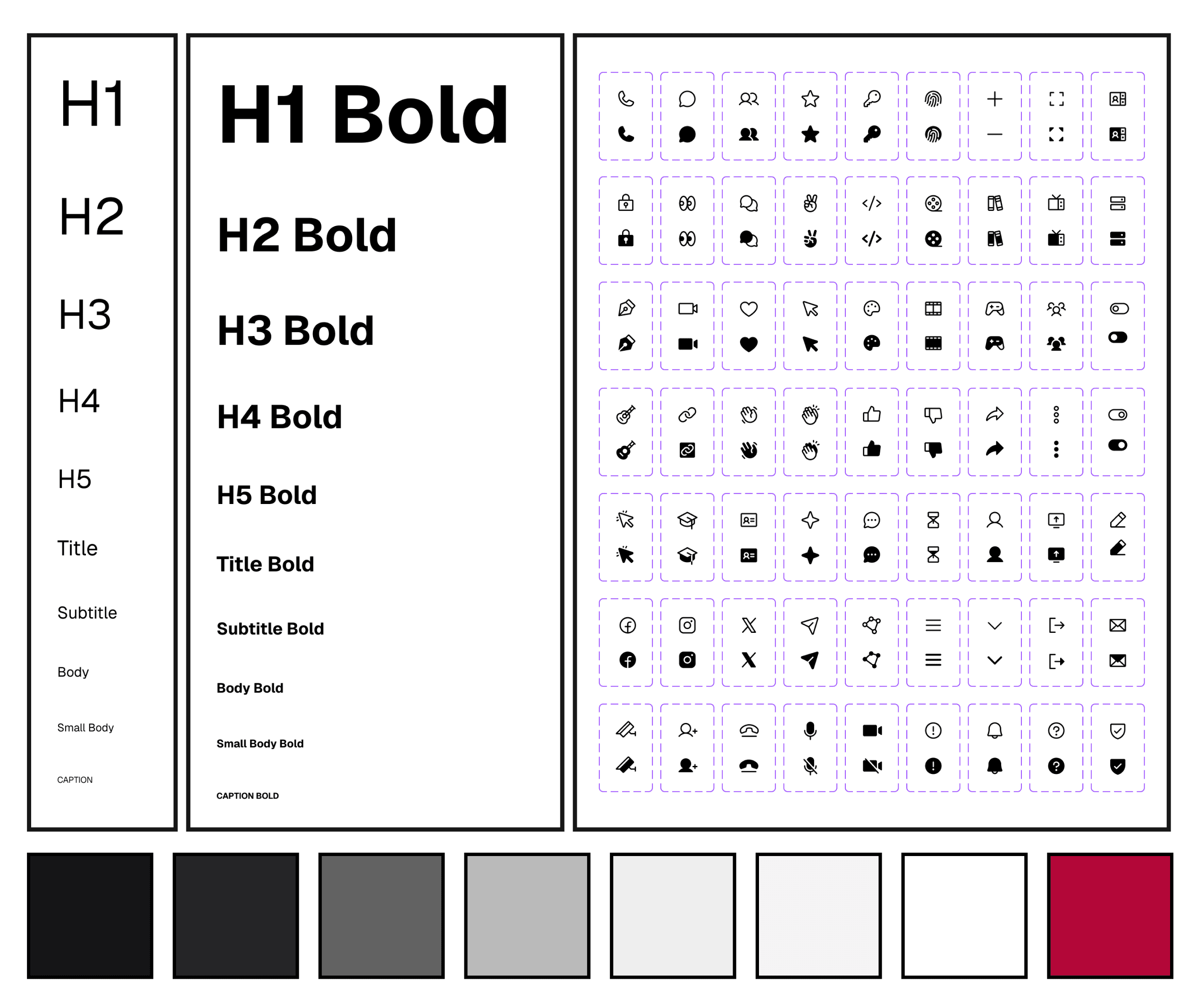
Assume Chat Typefaces, Icons, Colors
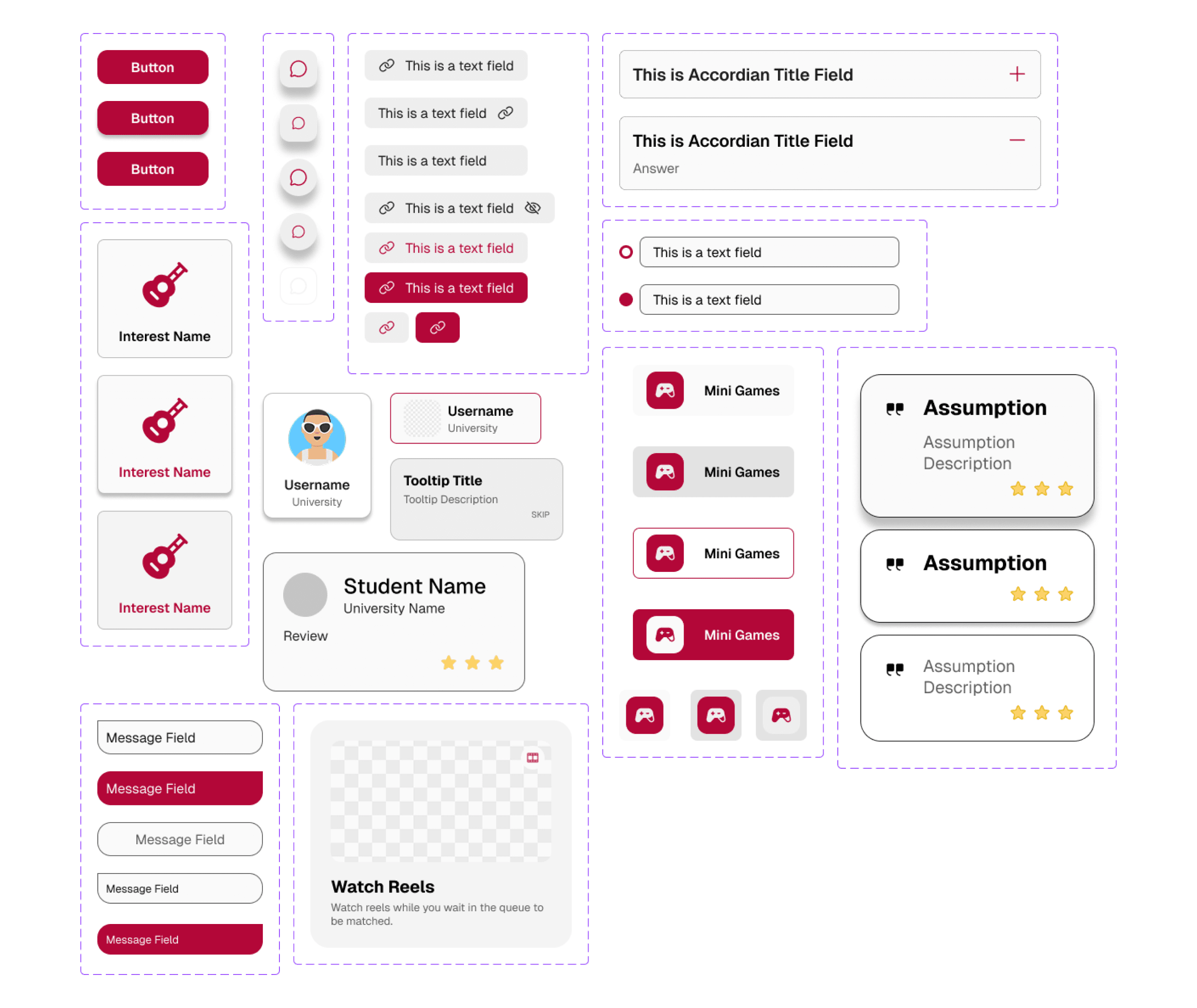
Assume Chat Components
Designing Assume Chat was more than just creating a chat platform, it was about reimagining how college students connect in meaningful, spontaneous ways. With verified college email logins, clear onboarding, and purposeful chat experiences, the product ensures safety without sacrificing fun. This project was a deep dive into balancing anonymity with authenticity, and spontaneity with structure. From ideation to iteration, every decision aimed to turn moments of curiosity into memorable conversations. The final flow reflects that balance, giving users a safe, delightful space to assume less and connect more.
WHAT I LEARNT
Rely on user psychology to craft flows that eased hesitation and awkwardness.
Create trust through visual design and microcopy especially around safety and data usage.
Balance playfulness with purpose, using gamified elements like assumptions and icebreakers without diluting the core intent.
EDITORS NOTE
This was my first complete industry design project at an internship, I worked relentlessly for 2 months doing the solo design work on AssumeChat. I collaborated closely with the dev team and stakeholders throughout, conducted informal user interviews with my college peers, and iterated across sketches, flows, wireframes, and high-fidelity screens. While the platform is now live, this case study reflects my personal design process and the key decisions that shaped the current version of AssumeChat. Now that I’m no longer part of the Assume Chat team, hopefully people find it just as fun as I did when i designed it :)
Got a creative idea? lET’S cONNECT
Whether you’re building something from scratch or just want to brainstorm an idea, I’d love to hear from you.